
Punjab, a land of vibrant colours, spirited dances, and soulful music, has long been a melting pot of diverse cultures and spiritual traditions. While Sikhism is a defining force in the region’s identity, Sufism has also played a profound role in shaping Punjab’s spiritual and cultural ethos. In the western parts of Punjab, the influence of Sufi saints and pirs (spiritual leaders) has left an indelible mark on the hearts and minds of its people. Despite the increasing popularity of Sufi music today, the lives of many Sufi artists remain fraught with challenges, reflecting the paradox of reverence for the art but indifference toward its custodians.
The history of Sufism in Punjab is intertwined with its message of universal love, equality, and devotion to the divine. From the teachings of Baba Farid, the revered Sufi saint whose verses are part of the Guru Granth Sahib, to the enduring poetry of Bulleh Shah, Punjab has been a fertile ground for Sufi thought. Sufi shrines, often maintained by Dalit communities, have served as sanctuaries of spiritual solace and social inclusivity. These shrines, referred to as dargahs, are spaces where caste, class, and creed dissolve in the presence of the divine.
For centuries, the Dalit community has been entrusted with the upkeep of these sacred spaces. In doing so, they have preserved not only the physical structures but also the intangible heritage of Sufi music, which resonates within the walls of these shrines. However, the socio-economic status of these custodians often remains precarious, revealing a stark contrast between the transcendental messages of Sufism and the material realities of its practitioners.
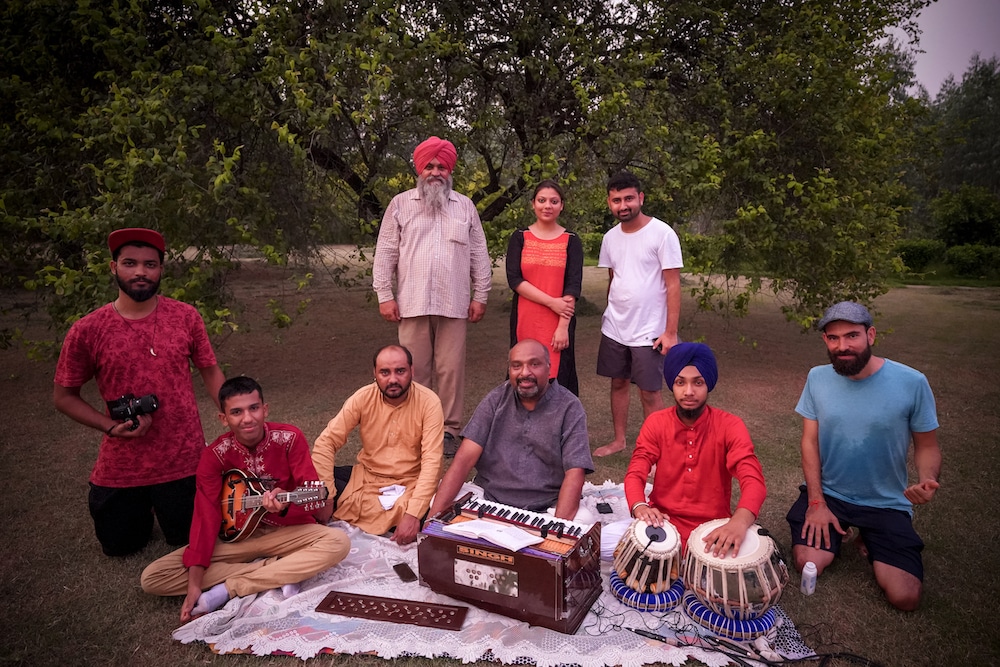
Amid this cultural tapestry, Ali, a gifted Sufi singer from Punjab, stands as a beacon of hope and devotion. As the Head of the Music Department at Patiala University, Ali has dedicated his life to preserving and spreading the soul-stirring melodies of Sufi music. His versatile group, composed of equally talented artists, shares his mission to surrender their art and souls to the Almighty. Through their music, they embody the essence of Sufism, channeling its timeless message of spiritual harmony.
Ali’s repertoire includes the evocative qawwalis of Abida Parveen, Nusrat Fateh Ali Khan, and Ghulam Ali, as well as compositions inspired by legendary Sufi poets like Rumi, Bulleh Shah, Kabir, and Faiz Ahmed Faiz. Each performance is a heartfelt invocation, a bridge between the earthly and the divine, as the group seeks to immerse their audience in the mystical experience of unity with God.
Sufi music is not just a genre; it is a spiritual practice that transcends the boundaries of religion, geography, and language. Its poetic expressions speak directly to the soul, addressing themes of divine love, human longing, and the trials of existence. Ali’s performances often include verses like:
“Rabba mere haal da mehram tu
(You are the only one who understands my feelings)”
These lines, steeped in longing and vulnerability, reflect the human quest for connection with the divine. Sufi poetry serves as a reminder that ultimate fulfillment lies not in worldly pursuits but in surrender to a higher power.
Ali’s group also delves into the works of mystics who explore the complexity of human emotions and the divine-human relationship. Their renditions of timeless poetry weave tales of joy, sorrow, and transcendence:
“Jo kuchh baab mere dukh darde, hai kee khabar kise nun
(No one knows how much pain my sorrows give)”
These verses, layered with emotional depth, find a home in the hearts of listeners who share the universal experience of longing and solace.
Despite their spiritual and cultural significance, Sufi artists like Ali face numerous challenges in sustaining their craft. The commercialization of music often sidelines traditional forms like qawwali, kafi, and ghazal in favor of mass entertainment. Additionally, the socio-economic struggles of artists—particularly those from marginalized communities—highlight the dissonance between the reverence for Sufi music and the neglect of its practitioners.
For Ali, the journey of a Sufi artist is one of passion and sacrifice. He acknowledges the difficulties of balancing his artistic aspirations with the practicalities of life. Yet, his devotion to Sufi music remains unwavering. Ali’s group refuses to dilute their art by performing Bollywood numbers or other popular genres, choosing instead to preserve the authenticity of their tradition. This commitment, while noble, comes at the cost of financial stability and widespread recognition.
Sufism’s universal appeal lies in its philosophy of love, unity, and transcendence. Ali’s music is a living testament to these ideals, transcending religious and cultural boundaries to resonate with diverse audiences. Through their performances, Ali and his group strive to dissolve barriers, connecting people to their shared humanity and the divine.
The Sufi tradition in Punjab, with its rich repertoire of poetry and music, offers a powerful antidote to the divisions and discord of modern society. It reminds us that spiritual harmony can be achieved through the simple yet profound act of surrender—surrender to the Almighty, to love, and to the shared rhythms of existence.
For Sufi artists like Ali, the preservation of their art is not just a professional endeavor; it is a sacred duty. They serve as custodians of a heritage that has been passed down through generations, ensuring that its spiritual essence is not lost in the clamor of contemporary life. However, this preservation requires support—both from within their communities and from society at large.
Efforts to document and promote Sufi music can play a crucial role in sustaining its legacy. Initiatives like music festivals, academic research, and digital platforms can provide artists with the visibility and resources they need to thrive. At the same time, audiences have a role to play by supporting and appreciating the authenticity of traditional forms over commercialized imitations.
Ali and his group represent the resilience and spirit of Sufi music in Punjab. Through their soulful performances, they keep alive a tradition that speaks to the deepest yearnings of the human soul. Despite the challenges they face, their commitment to their art and to the message of Sufism remains unshaken.
In a world often divided by differences, the music of Sufi artists like Ali offers a unifying force, a reminder of our shared humanity and our connection to the divine. As Ali sings:
“Ochee jah dil noo lagaya
(I fall in love with the ultimate lover, which is my LORD)”
This love, pure and unyielding, is the essence of Sufism—a timeless symphony that continues to resonate in the hearts of all who listen.


